
Outside Colorado? Get Free Shipping + No Sales Tax in Most States

We love our pets. The hair they leave behind? Not so much. If you have a dog, cat, or any furry companion, you already know that standard vacuums often struggle with embedded fur, floating dander, and the fine undercoat hair that weaves itself into every carpet fiber and upholstery seam. Choosing the right vacuum for pet hair is not about grabbing whatever is on sale — it is about understanding what actually makes a vacuum perform in a pet-friendly home.
I have been working with vacuums for over 30 years, starting as a vacuum technician long before I founded Rocky Mountain Sewing & Vacuum. In that time, I have repaired thousands of machines and seen exactly what happens when someone buys the wrong vacuum for their situation. This guide walks you through the five things that matter most so you can make a confident decision.
Quick answer: The right vacuum for pet hair depends on your flooring, allergy needs, and maintenance preferences. Focus on these five factors: vacuum style (canister vs. upright), HEPA filtration with a sealed system, brushroll design, bagged vs. bagless collection, and long-term serviceability. Brands like Miele, SEBO, and Riccar consistently perform well for pet owners because they combine strong suction, true HEPA filtration, and parts availability for years of reliable use.
Key considerations: Strong motorized brushroll for embedded hair • True HEPA filtration (99.97% at 0.3 microns) for dander and allergens • Sealed system to prevent air leaks • Bagged collection for allergy-sensitive homes • Serviceable design with replaceable parts
Pet hair is not like regular dust or debris. It wraps around brushrolls, clogs filters faster, and clings to carpet fibers with static electricity. Short-haired breeds shed fine, needle-like hairs that burrow deep into carpet pile, while long-haired breeds leave thick strands that tangle around moving parts.
Then there is dander — microscopic skin flakes that carry allergens through your home. A vacuum that picks up visible hair but recirculates dander through its exhaust is only doing half the job. For pet owners, a vacuum needs to handle three things well: strong pickup at the floor, effective filtration to trap allergens, and a design that does not clog or lose suction over time.
This is one of the first decisions you will face, and it depends on your home’s layout and flooring.
Uprights are the workhorses of carpet cleaning. Their motorized brushrolls sit directly against the floor, delivering aggressive agitation that loosens embedded pet hair from carpet fibers. If your home is primarily carpeted, an upright is usually the best starting point.
Models like the Riccar R25 Deluxe combine a powerful motor with HEPA media and charcoal filtration, making them effective for both hair pickup and allergen control. The metal brushroller on the Riccar Supralite R10P Premium is especially durable — it will not degrade the way rubber or foam rollers do after months of battling pet hair.
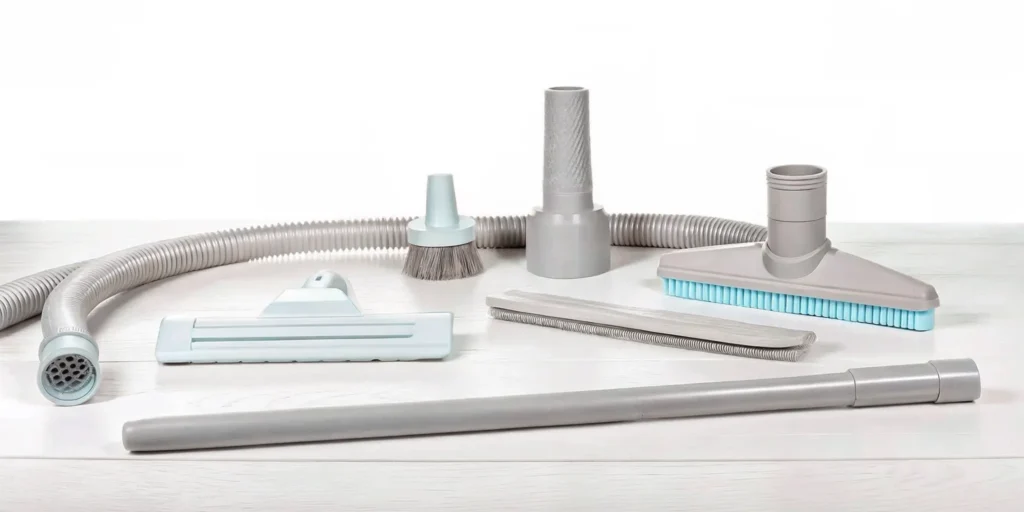
Canister vacuums separate the motor and collection unit from the cleaning head, giving you more flexibility. They tend to excel on hard floors, stairs, and under furniture — areas where pet hair loves to gather. Many canisters also accept powered floor heads that rival uprights for carpet performance.
The Miele Blizzard CX1 Cat & Dog was specifically engineered for pet owners, with a charcoal filter layer to neutralize odors and a turbine brush designed for upholstery. For a bagged option, the Miele Kona Complete C3 includes the SEB 228 powerhead, which transitions smoothly between carpet and hard floors.
If your home is mostly carpet, start with an upright. If you have a mix of hard floors, area rugs, and furniture you need to clean around, a canister gives you the versatility pet owners often need. You can explore our full lineup of canister vacuums and all vacuum styles to compare.
For pet owners, filtration is not optional — it is essential. Without proper filtration, your vacuum picks up hair from the floor and blows fine dander and allergens right back into the air you breathe.
HEPA (High-Efficiency Particulate Air) filters capture 99.97% of particles down to 0.3 microns. That includes pet dander, pollen, dust mites, and other allergens that trigger reactions. If anyone in your household has allergies or asthma, HEPA filtration should be a firm requirement.
Brands like Miele, Riccar, and SEBO all offer models with true HEPA filtration — not just “HEPA-type” or “HEPA-style” filters, which do not meet the same standard.
Charcoal (activated carbon) filters address something HEPA alone cannot: odor. Homes with pets develop a distinct smell that standard vacuuming can actually spread. Charcoal filtration neutralizes odors at the source, which is why models like the Miele Cat & Dog series include it as a standard feature.
The best filtration means nothing if air leaks around the filter. Look for vacuums with sealed filtration systems, where all air entering the machine must pass through the filter before exiting. Miele and SEBO are known for their sealed system designs, which is one of the reasons we carry and recommend them.
The brushroll is where the real work happens. It is the spinning brush bar at the base of the vacuum that agitates carpet fibers and loosens embedded hair.
No matter how good the brushroll, pet hair will eventually accumulate. The real question is how easy it is to maintain. Some models feature tool-free brushroll removal, so you can clean off wrapped hair in seconds. Others require disassembly. We always recommend asking about maintenance before you buy — it is one of the most overlooked factors.
This is a personal preference for most people, but for pet owners, it carries extra weight.
Bagged vacuums seal collected hair, dander, and allergens inside a replaceable bag. When the bag is full, you remove and discard it — minimal dust exposure, no mess. For allergy sufferers, this is a significant advantage because you never have to handle or breathe in the contents.
Premium bags (like Miele’s AirClean bags or SEBO’s Ultra bags) function as an additional filtration layer, trapping fine particles before air even reaches the main filter. The result is cleaner exhaust and longer filter life.
Bagless designs use a dust bin that you empty and reuse. The appeal is obvious — no ongoing bag costs. However, emptying a bin full of pet hair can release a cloud of dander and dust, which defeats the purpose for allergy-sensitive households.
The Miele Blizzard CX1 Cat & Dog addresses this with a hygienic emptying system that minimizes dust exposure. If you prefer bagless but have allergies, look for a model with a sealed emptying mechanism.
For most pet owners, a bagged vacuum with HEPA filtration provides the cleanest experience. You pay a small ongoing cost for bags, but the trade-off in air quality and convenience is well worth it.
Here is something most buying guides will not tell you: the best vacuum for pet hair is the one that stays working for years, not months.
Pet hair is hard on vacuums. Brushrolls wear down, belts stretch, motors strain under heavy use, and filters need replacement. If your vacuum cannot be serviced, repaired, or maintained, you are looking at a replacement cycle of 2–3 years instead of 10–15.
This is why we focus on brands like Miele, SEBO, and Riccar. These machines are designed to be serviced — replacement parts are widely available, filters and bags are straightforward to change, and the internal components are built to last.
At Rocky Mountain Sewing & Vacuum, our vacuum repair service covers most brands, including machines not purchased from us. Our factory-trained technicians can tune up, repair, and extend the life of a quality vacuum far beyond what a non-serviceable machine can deliver.
When you buy a machine you can service, you are investing once. That is the difference between a premium vacuum and one that ends up at the curb.
We carry several brands that consistently perform well for pet owners. Here is a quick overview based on years of hands-on experience and customer feedback.
German-engineered, known for sealed filtration systems, whisper-quiet operation, and 20+ year lifespans. The Cat & Dog series is purpose-built for pet homes, and their Complete C3 canisters are some of the most versatile machines we sell. See our full Miele collection →
For a deep dive, read our Miele Complete C3 Cat & Dog Canister Vacuum Review.
Another German brand, SEBO builds commercial-grade vacuums for residential use. The Automatic X7 Premium upright adjusts brush height automatically based on your carpet type, and the Airbelt E3 and K3 canisters offer outstanding filtration with a compact footprint. If durability is your top priority, SEBO is hard to beat. Read our SEBO vacuum review for more details.
Riccar machines are assembled in the USA and focus on filtration and cleaning performance. The R25 Deluxe upright combines HEPA media filtration with charcoal odor control — making it a strong all-around pick for pet owners on a reasonable budget.
With so many factors to weigh, here is a quick decision framework:
The best vacuum depends on your home and your specific needs. For carpet-heavy homes, an upright like the Riccar R25 Deluxe offers strong suction and HEPA filtration. For mixed flooring, a canister like the Miele Complete C3 Cat & Dog provides versatility with pet-specific features. The key factors are filtration quality, brushroll design, and long-term serviceability.
Both can be effective. Uprights deliver more brushroll agitation for deep carpet cleaning, while canisters offer greater reach and flexibility for hard floors, stairs, and furniture. Many pet owners find a canister with a motorized powerhead gives them the best of both worlds.
High-traffic areas and rooms where your pets spend the most time should be vacuumed at least two to three times per week. Upholstery and stairs benefit from a weekly pass. Regular vacuuming prevents hair and dander from building up to the point where it is difficult to remove.
Yes. True HEPA filters capture 99.97% of particles at 0.3 microns, which includes pet dander and common allergens. Combined with a sealed filtration system, a HEPA vacuum can significantly reduce airborne allergens in your home.
Absolutely. Rocky Mountain Sewing & Vacuum offers professional vacuum repair and maintenance at our four Colorado locations in Arvada, Aurora, Littleton, and Colorado Springs. Our factory-trained technicians service most brands — even if you did not purchase your machine from us. Visit our vacuum repair page for details.
Ready to find the right vacuum for your pet-friendly home? Stop by any of our four Colorado locations in Arvada, Aurora, Littleton, or Colorado Springs to try machines hands-on and get expert advice. Or browse our full vacuum collection online and give us a call — we are always happy to help you find the right fit.