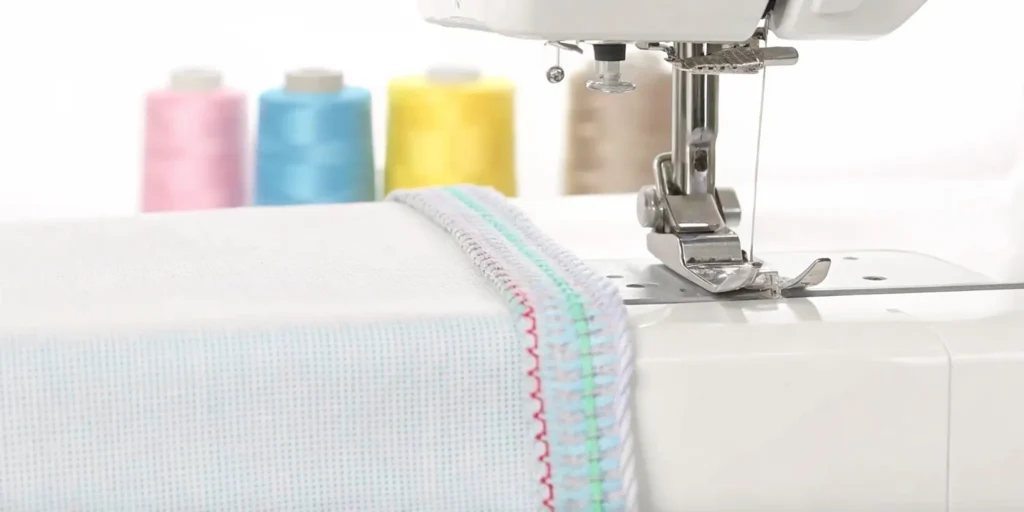


You finish pinning a perfectly matched plaid or carefully nested quilt seam, sew several inches, and discover that the top layer has crept ahead. That familiar frustration is exactly what the PFAFF IDT system is designed to address. Integrated Dual Feed coordinates fabric movement from above and below, giving knowledgeable sewists more control without the bulk of a removable walking foot.
Schedule an in-store PFAFF demo at Rocky Mountain Sewing & Vacuum
IDT is especially useful when multiple layers, long seams, slippery textiles, stretch knits, or carefully matched motifs make ordinary bottom feeding less predictable. It does not replace good preparation, correct needle choice, or testing on scraps. Instead, it gives the machine a more balanced way to transport fabric while preserving a clear view of the needle area.
This guide explains the mechanism, compares it with a walking foot, and shows where it makes the greatest difference in quilting and garment sewing. It also covers settings to test, compatible presser-foot considerations, and the times when disengaging IDT is the technically correct choice.
The PFAFF IDT system uses an integrated upper feed element behind the presser foot to supplement the feed dogs beneath the needle plate. When engaged with an IDT-compatible presser foot, the upper and lower feeds help advance the fabric layers together. The goal is not simply more pulling force. It is more consistent relative movement between the layers.
On a conventional sewing machine, the feed dogs contact the bottom layer while presser-foot pressure acts on the stack from above. As the feed dogs move the bottom fabric, friction between the presser foot and top layer can resist that motion. Over a long seam, even slight differences accumulate. The result may be a mismatched seam end, distorted plaid, puckered binding, or a quilt block that no longer lies square.
Pinning, basting, and careful handling still matter, but none changes the fact that the machine is feeding primarily from below. IDT adds contact from above so the top fabric is not merely carried along by friction with the bottom fabric. That balanced transport is why the feature is useful well beyond thick quilt sandwiches.
The slim IDT lever lowers into the opening at the back of a compatible presser foot. Once engaged, the upper feed element participates in moving the work. Because the mechanism is built into the machine, it stays aligned and ready without replacing the entire foot assembly. Sewists can switch between compatible feet while retaining the dual-feed advantage.
The mechanism is intentionally compact. That leaves better visibility around the needle than a typical add-on walking foot and makes it practical for routine seams, edge stitching, piecing, and topstitching. It also means you can use specialized compatible feet instead of being limited to the sole attached to a walking-foot assembly.
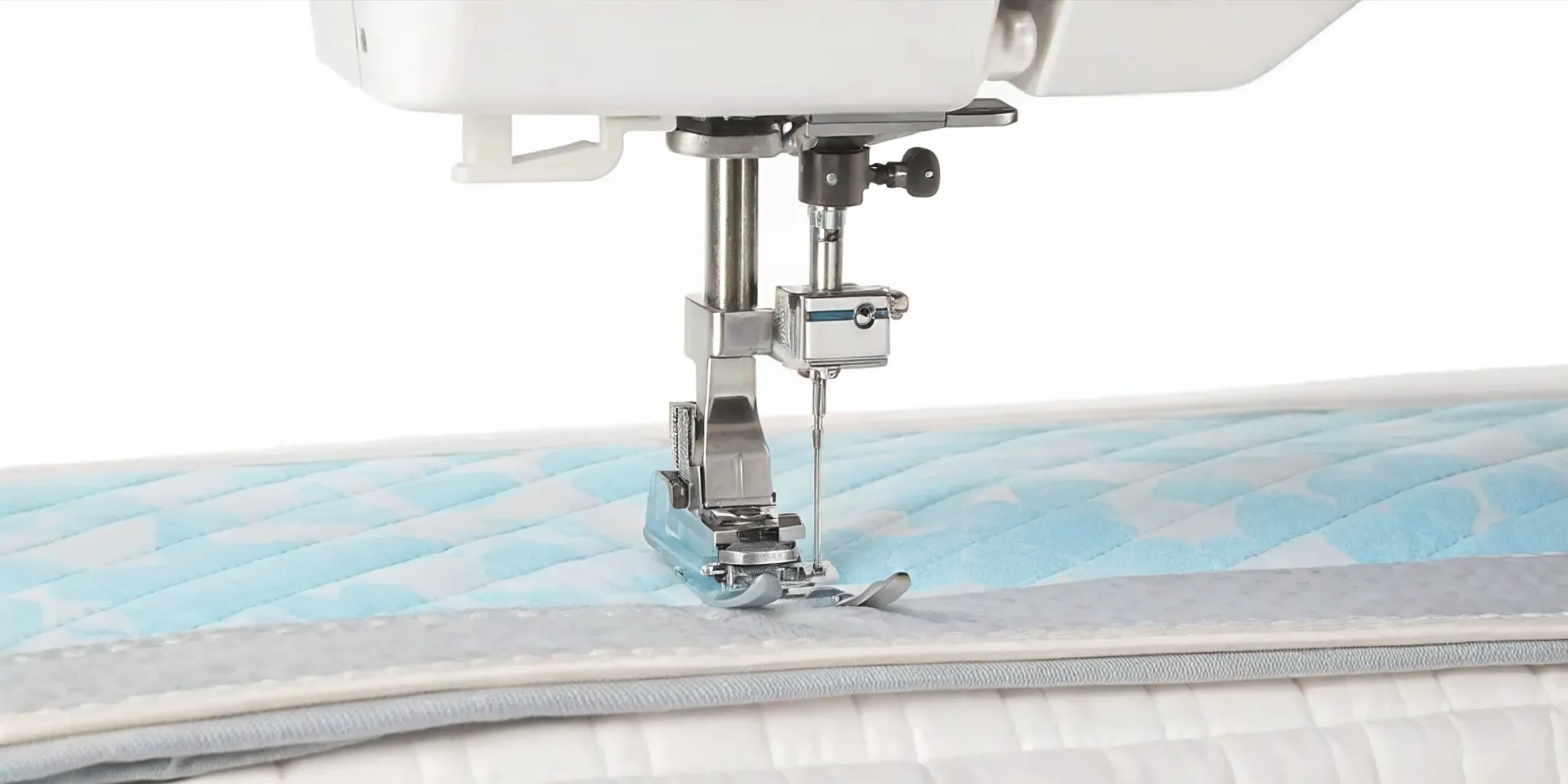
Both the PFAFF IDT system and a walking foot address layer shift by adding feed action above the fabric, but they differ in setup, visibility, presser-foot options, and everyday convenience. A walking foot is a removable accessory driven by the needle-bar motion. IDT is part of a compatible PFAFF machine and can be engaged or disengaged in seconds.
| Consideration | PFAFF IDT system | Walking foot |
|---|---|---|
| Setup | Integrated mechanism engages behind a compatible foot | Accessory must be installed in place of the standard foot |
| Needle-area visibility | Slim mechanism preserves a relatively open view | Larger assembly may reduce the view around the needle |
| Presser-foot choice | Works with a range of IDT-compatible feet | Limited to the soles or options made for that walking foot |
| Best use | Routine piecing, matching, garment seams, topstitching, and layered work | Occasional even-feed work on a machine without integrated dual feed |
| Switching tasks | Quick to engage or disengage | Usually requires removing and reinstalling the accessory |
A walking foot remains a valuable solution for machines without integrated dual feed, especially for straight-line quilting and bulky layered projects. IDT’s advantage is that balanced feeding becomes an everyday option rather than a special setup. If a seam begins on a single layer, crosses a bulky intersection, and ends on multiple layers, the integrated system is already available to help maintain control.
Quilters use the PFAFF IDT system because accurate piecing depends on controlling small differences across many seams. A shift of only a fraction of an inch at each unit can affect points, block dimensions, and final assembly. Dual feed is most helpful where the top layer would otherwise creep or where thickness changes along the seam.
For standard patchwork piecing, begin with the seam allowance, needle position, and foot recommended for your pattern. IDT can help the cut edges arrive at the end of the seam together, particularly on longer strips or units with bias edges. It will not correct inaccurate cutting or an inconsistent seam allowance, but it reduces one source of cumulative error.
When nesting seam allowances, approach the intersection at a controlled speed and let the feed system advance the layers. Pulling from behind can distort the seam or override the coordinated feed. For chain piecing, test the first few units and measure them before committing the full stack of blocks.
Binding places multiple folds over a quilt edge, then asks the machine to cross seam allowances and changes in thickness. Dual feed helps the binding and quilt edge travel together, reducing the tendency for the top fold to grow ahead of the lower layers. Clips or pins are still useful, particularly at corners and joins.
IDT also supports straight-line quilting on manageable quilt sandwiches. Use a fresh needle suited to the thread and materials, increase stitch length from a piecing setting, and test the complete sandwich first. For dense free-motion quilting, the feed dogs and IDT should be disengaged so you can move the work independently.
Garment sewists benefit from the PFAFF IDT system when fabric behavior threatens alignment or finish quality. Long seams, matched patterns, stretch knits, and slick woven fabrics are strong candidates. The system helps manage transport, while the sewist still chooses the correct needle, thread, presser-foot pressure, stitch, and stabilization.
Matching a plaid at a side seam requires more than aligning the pattern at the start. If the top layer creeps while sewing, matched lines can drift before the seam reaches the hem. Dual feed helps both layers travel together, preserving the alignment established during cutting and pinning. Baste highly visible intersections first, then sew at a steady pace without stretching either layer.
Long seams in trousers, skirts, and coats can also reveal differential feeding. Mark notches accurately and check them as the seam advances. If the layers still finish unevenly, evaluate grain, cutting accuracy, presser-foot pressure, and whether one layer was stretched during handling.
On knits, the presser foot can push or stretch the upper layer while the feed dogs move the lower layer. IDT helps reduce that mismatch, which can limit waviness along hems and seams. It does not replace a stretch-compatible stitch or appropriate ballpoint, jersey, or stretch needle. Test scraps in the same grain direction and with the same number of layers as the final seam.
Silk, rayon, lining, and other slippery materials can shift before and during stitching. Balanced feeding provides more control, but preparation remains essential. Use fine pins or clips appropriate to the material, support the fabric so it does not pull off the table, and consider stabilizer where the project permits it.
There is no single correct setting for every project. Fabric structure, thread weight, needle, seam purpose, and machine model all matter. The following ranges are useful starting points for test stitching, not fixed rules. Always compare the sample with the result your project requires and consult the guidance for your specific machine.
Make the test sample from the actual project materials, including batting, interfacing, stabilizer, and seam intersections. Sew at least several inches rather than judging two or three stitches. Check the top and underside, then press the sample if the final construction will be pressed. This process reveals puckering, skipped stitches, tunneling, or layer shift before it reaches the project.
Ask our sewing machine service team about feeding, tension, or stitch-quality concerns
Successful dual-feed sewing begins with correct engagement, an IDT-compatible foot, and a realistic test. The mechanism should click into position behind the foot without being forced. If the lever does not align naturally, stop and confirm the foot and setup before sewing.
Guide the project rather than pushing or pulling it. Pulling behind the presser foot can lengthen stitches, distort the fabric, and interfere with balanced feeding. For large quilts or long garment panels, support the weight on the table so gravity does not drag the work away from the needle.
Clean the feed-dog area as recommended and replace worn or damaged needles promptly. If fabric still tracks unevenly after careful setup, test a simpler stack and consult the manual or a technician. Persistent problems may relate to presser-foot pressure, feed timing, foot compatibility, or another machine-specific issue.
Disengage the PFAFF IDT system when the technique requires independent fabric movement or when the selected presser foot is not IDT-compatible. Free-motion quilting, darning, and certain specialty-foot techniques are common examples. Never force the mechanism behind a foot that lacks the correct opening.
In free-motion quilting or darning, the sewist controls the direction and distance of fabric movement while the feed dogs are lowered or covered. An engaged upper feed would work against that freedom. Disengage IDT, install the correct free-motion foot, and follow the setup instructions for your machine.
Some decorative techniques intentionally manipulate fabric movement, use a specialty foot, or require a setting that is not suited to dual feed. Treat compatibility as a technical requirement, not a preference. When in doubt, check the machine and accessory instructions or ask for an in-person demonstration.
IDT has appeared across multiple PFAFF machine families and generations, but features, compatible feet, and controls vary by model. Rather than assuming every machine has the same implementation, compare the exact machines currently available and test the fabrics you sew most often.
Rocky Mountain Sewing & Vacuum has published hands-on information about the PFAFF quilt expression 720 and the PFAFF creative icon 2. Availability can change, so browse the current PFAFF sewing machine selection or speak with our team before choosing a model.
For a useful comparison, bring a small sample pack: two quilt-piecing strips with nested seams, a plaid or stripe, a knit, a slippery woven, and a layered binding sample. Sew the same test on each machine. Pay attention to how easily IDT engages, which feet support your work, visibility around the needle, fabric handling, and the overall feel of the machine.
For many routine even-feed tasks on a compatible PFAFF machine, IDT performs the role that would otherwise require a walking foot. It is integrated, quick to engage, and works with multiple compatible presser feet. Some sewists may still use a specialty walking-foot setup for a particular technique, so the best choice depends on the machine and project.
No. Use IDT only with a presser foot designed to accept the integrated feed mechanism. A compatible foot has the correct space at the back for engagement. Disengage IDT for incompatible specialty feet and follow the instructions supplied with the foot and machine.
No. Free-motion quilting depends on the sewist moving the fabric independently, typically with the feed dogs lowered or covered. Disengage IDT and use the correct free-motion setup for your specific PFAFF model.
IDT can reduce layer shift caused by differential feeding, but it cannot correct every stitch-quality problem. Puckering or poor tension may involve the needle, thread, stabilizer, presser-foot pressure, tension settings, fabric handling, or machine condition. Test systematically and seek service if the issue persists.
The best way to decide whether integrated dual feed fits your sewing is to test it with your own kinds of projects. Bring fabric samples, a WIP, or questions about a troublesome seam to Rocky Mountain Sewing & Vacuum. Our team can help you compare compatible machines, feet, and settings while showing where IDT makes a meaningful difference.
Visit one of our Colorado locations to schedule a PFAFF demonstration or consultation