
Outside Colorado? Get Free Shipping + No Sales Tax in Most States
Searching for quilting classes near me usually means you are ready for more than a pattern. You want a place where someone can look at your seams, answer the question you are nervous to ask. And help you leave with more confidence than you had when you walked in.
Ready to find your next class? View our quilting classes and events, or stop by Rocky Mountain Sewing & Vacuum in Arvada, Aurora, Littleton, or Colorado Springs.
The best quilting class is the one that fits your next step. For one person, that may be a true beginner class with cutting, piecing, pressing, and binding. For another, it may be longarm instruction, a machine-owner class, a virtual workshop, or a Sew Fun event where the community is part of the lesson.
At Rocky Mountain Sewing & Vacuum, we see both kinds of quilters every week. Some are making a first table runner. Others are finishing UFOs, learning a new machine, or getting ready to quilt a full-size top. This guide will help you choose the right class format, prepare for your first session, and find the Colorado location that feels like home.
Finding the right quilting group starts with knowing what you want to build. If you are searching for quilting classes near me, we want to help you match your training to your creative goals. Choosing a path keeps you from feeling lost in your journey.
If you are new to the craft, you should look for a structured program. A good course teaches you how to read a pattern and cut fabric. Research shows that learning spatial crafts like sewing can help you keep your mind sharp as you age. We suggest starting with a simple block pattern to build your confidence. You will learn key skills like piecing, pressing, and machine binding. Our beginning quilting classes offer a supportive environment to guide your first stitches.
Many quilters have unfinished objects, often called UFOs, sitting in their closets. You do not have to finish these works in progress alone. Joining a workshop can help you solve tricky issues with thread tension or blocks. Working with others also improves your mental well-being. In fact, academic studies find that crafting raises life satisfaction and builds happiness. A supportive mentor can help you finish those old projects and clear your sewing space.
Maybe you just bought a new sewing machine and feel unsure about its features. Learning a new machine can feel hard. We want you to get the most out of your tools. That is why we offer free basic machine-owner classes for our customers. You will learn to use all your machine settings in a hands-on space. This training helps you master your equipment before starting your next big project.
Once you master the basics, you might want to try longarm quilting. Longarm machines let you finish large quilts with speed and precision. We offer hands-on longarm instruction to help you take the next step. You can also join our Sew Fun events to meet other local makers. These gatherings are a great way to share ideas and find inspiration for your next project. You can explore all quilting classes on our website to find a session that fits your schedule.
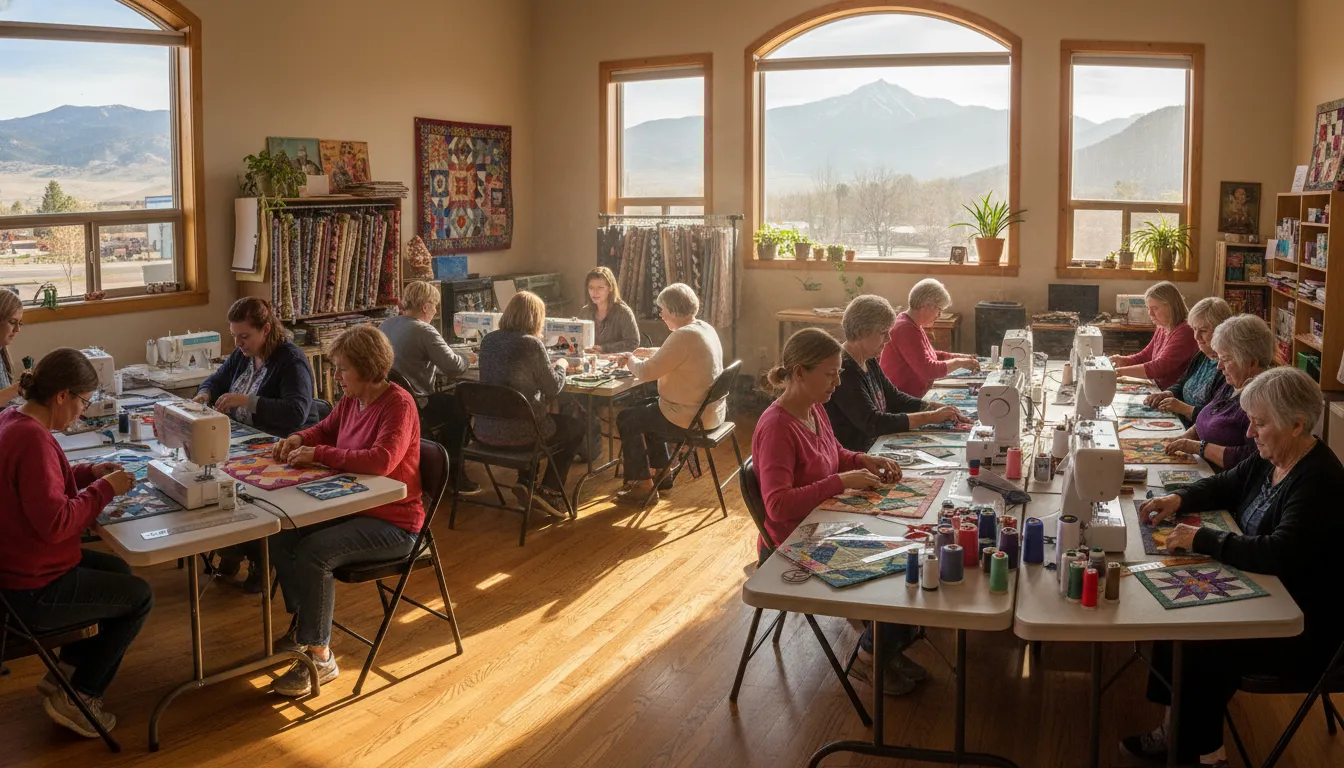
We want to make learning easy for everyone in the Colorado Front Range. Our classes run in friendly, local spaces with expert teachers who want to help you grow. You can visit us at any of our four retail locations:
We also offer virtual classes for those who prefer learning from home. No matter which store you visit, you will find a warm community ready to support your sewing journey.
Yes. Quilting classes are not all built for the same goal. A beginner may need slow, step-by-step help. A long-time quilter may need one focused afternoon to learn a new ruler, foot, hoop, or longarm method.
Before you register, ask what you want the class to solve. Do you need a finished project? Do you need help with your machine? Do you want a social sewing day? That answer matters more than the class title.
| Class type. | Best fit. | What you learn. |
|---|---|---|
| Beginner or project class. | New quilters and returning makers. | Pattern reading, cutting, piecing, pressing, quilting, and binding. |
| Machine-owner class. | Anyone with a new sewing machine. | Threading, settings, feet, stitch choices, and care basics. |
| Longarm instruction. | Quilters ready to finish larger tops. | Loading a quilt, tension, rulers, pantographs, and safe machine use. |
| Virtual class. | Busy quilters or those far from a store. | Remote guidance, demos, and project support from home. |
| Sew Fun event. | Makers who want ideas and community. | New products, demos, tips, show-and-tell, and local connection. |
Project classes work well when you want to leave with visible progress. These are great for first quilts, seasonal projects, bags, table runners, wall hangings, or skill builders. You learn the technique while making something useful.
If you are not sure where to begin, start with a class that lists the skill level, supply list, and finished project size. Our all classes calendar is the best place to compare options by date, store, and topic.
Machine-owner classes are different from project classes. Their goal is not a finished quilt. Their goal is confidence. If you know how to thread, adjust tension, change feet, and choose stitches, every future quilt feels easier.
Longarm instruction is also its own lane. It helps you move from piecing a top to finishing the quilt. Sew Fun events add another benefit: community. You get ideas, meet other makers, and hear what is working for quilters near you.
Need help choosing? View our quilting classes and look for the format that matches your next project.
A beginner quilting class should feel clear, kind, and hands-on. You should not feel rushed or talked down to. You should know what to bring, what you will make, and what skills the teacher will cover.
Most beginner classes start before the first stitch. You may need fabric, thread, rotary cutting tools, pins or clips, a ruler, a mat, and a sewing machine in good working order. The class listing should tell you what is required.
Read the supply list early. If a fabric choice, thread weight, or tool does not make sense, ask the store before class day. That small step prevents a lot of stress at the cutting table.
A strong beginner class teaches more than how to sew two pieces of fabric together. You should learn how to read the pattern, cut with care, press seams, match blocks, and fix small mistakes. You should also learn why each step matters.
Outside education programs describe beginner quilting as a mix of pattern reading, accurate cutting, piecing, pressing, basting, machine quilting, and binding. That is a helpful checklist. If a class covers those basics, it gives you a foundation you can use again.
Good classes leave room for questions. Thread tension, seam allowance, skipped stitches, and wavy borders happen to everyone. A teacher can often see the issue faster than you can spot it at home.
That is why in-person help is so valuable. You can bring the real fabric, the real machine, and the real problem. Then you can practice the fix while the instructor is still beside you.
Learning a hands-on craft has benefits beyond the finished project. Researchers have linked creative arts and crafts with higher life satisfaction, and hands-on spatial activities may help adults maintain spatial skills over time. We see the simpler truth in our classrooms every week: making things feels good.
If you want to view our quilting classes, you might wonder if you need to bring your own sewing machine. The short answer is yes, we recommend it. Learning on your own machine helps you master its unique features, like thread tension and needle positions. When you practice on the same model you use at home, you build confidence faster.
We love helping you get comfortable with your gear. If you bought your machine from us, we offer free basic machine-owner classes to get you started. Research from the National Institutes of Health shows that hands-on crafts like quilting can help keep your spatial skills sharp as you age. Working on your own machine makes this mental exercise even more rewarding.
But what if your sewing machine is too heavy to carry? Or maybe you do not own a machine yet. Do not let that keep you from learning. We have top-quality sewing and quilting machines ready for you to use in our classrooms.
Using our store machines is a great way to try different brands before you buy. If you are looking for quilting classes near me, our beginner quilting classes cater to all skill levels. You can explore all quilting classes at our shops to see what fits your schedule. Whether you visit us in Arvada, Aurora, Littleton, or Colorado Springs, we make sure you have the tools you need to succeed.
We do not just teach classes; we also keep your machines running well. Our certified technicians provide expert sewing machine repair services for all major brands, even if you bought your machine somewhere else. We want to remove the stress of maintenance so you can focus on the joy of creating.
A typical quilting for beginners course teaches several core skills. To make your journey simple, our team supports you with every step:
We are here to help you through every hurdle, from troubleshooting tension issues to selecting your next machine. Our shops are friendly places where you can learn, share, and grow with other local makers.
Finding a welcoming space to learn is the first step of your creative path. When you search for quilting classes near me, you will see we have many shops in Colorado. Rocky Mountain Sewing & Vacuum runs four stores across the Colorado Front Range. You can find us in Arvada, Aurora, Littleton, or Colorado Springs.
Choosing a shop is not just about finding the closest door. You will want to look at the monthly calendars to see which location fits your schedule. Some sewers prefer to drive a bit further for a specific class. Others want a quick trip after work or on weekends.
We want to help you find the right fit for your sewing style. There are five clear details you should check before you sign up. These steps will ensure you get the most out of your time at our shops.
You can start your search by looking at our RMSV retail locations page. This will give you the exact address and hours for each store. You can also call or drop in to chat with the team at any time.
Taking classes in person brings deep benefits that you cannot get from a video screen. Working with your hands on fabric helps keep your mind active and sharp. In fact, research shows that taking part in creative arts and crafting activities like quilting is linked to more happiness. Learning with others in a shared space gives you a chance to bond over shared projects.
At Rocky Mountain Sewing & Vacuum, we want to see our students succeed. We offer longarm training, project-based sessions, and virtual options. Our classes cater to all skill levels with hands-on support. We invite you to explore all quilting classes on our calendar and pick the shop that fits you best.
Longarm and specialty classes are best when the basics are no longer the hard part. If you can piece a top but feel stuck at the quilting stage, it may be time to learn a new tool or technique.
You may be ready for longarm instruction if your quilt tops are getting larger, your domestic machine feels cramped, or you want smoother quilting lines. Longarm training can show you how to load a quilt, manage tension, and move the machine safely.
Do not wait until a special quilt is under the needle to learn the process. A practice class gives you room to make small mistakes without fear. It also helps you learn the language of backing, batting, leaders, rulers, and pantographs.
Specialty workshops are useful when one technique keeps slowing you down. That may be ruler work, machine embroidery, applique, free-motion quilting, binding, or advanced machine features. A focused class lets you work on one skill until it starts to feel natural.
This is also a smart way to test interest before you invest in more tools. You may love longarm quilting right away. You may find that embroidery is your new favorite add-on. A class helps you make that choice with support.
If you are thinking about a longarm, embroidery machine, or higher-end sewing machine, talk with us first. We can help you understand the space, learning curve, accessories, and support that come with each option.
At Rocky Mountain Sewing & Vacuum, education and equipment belong together. We do not want you to take home a machine and feel alone. Classes, demos, service, and local support help you grow into the tools you choose.
Once you find a class that looks interesting, slow down for five minutes. A quick check can save you from choosing a class that is too fast, too advanced, or not built for your project.
Pack the night before if you can. Wind bobbins, change the needle, test your thread, and label small tools. Bring a notebook, because quilting classes are full of tips you may want later.
If your machine has been skipping stitches, making loops, or fighting your fabric, do not ignore it. Schedule service before class if needed. Our sewing machine repair team works on all major brands and can help keep your machine ready.
The best class is not always the most advanced one. It is the class that helps you take the next clear step. Maybe that means finishing one UFO. Maybe it means learning one foot. Maybe it means meeting other quilters so you keep going.
When you search for quilting classes near me, look for more than a seat in a room. Look for a teacher, a shop, and a community that will still be there after class ends.
Choose a beginner class that lists the project, skill level, supply list, and core skills. Look for cutting, piecing, pressing, quilting, and binding. If you are nervous, call the store and ask whether the class is right for a first quilt.
Many quilters prefer to learn on their own machine because they will use it at home. Some classes may provide machines or allow store equipment. Always check the class details before you register.
Yes. Virtual quilting classes can be a good fit if you live far from a store, have a busy schedule, or want to learn from home. In-person classes are still best for hands-on machine help and direct feedback.
Longarm instruction often covers loading the quilt, setting tension, choosing thread, moving the machine, using rulers, and planning quilting designs. It is best for quilters who can piece a top and want help finishing larger quilts.
If you are ready to choose a class, start with the goal that matters most to you: a first quilt. A finished UFO, a new machine, longarm confidence, or a friendly sewing community. Then match that goal to the class format, location, and teacher that fit your life.
Rocky Mountain Sewing & Vacuum offers quilting education across Arvada, Aurora, Littleton, and Colorado Springs, with in-store and virtual options for many kinds of makers. Register for a class or visit a Colorado store to take your next step.