
Outside Colorado? Get Free Shipping + No Sales Tax in Most States

Your floors, stairs, and storage space should choose your vacuum, not showroom popularity. An upright can make carpet cleaning simple, while a canister can reach places one-piece machines cannot.
The choice between an upright and a canister vacuum depends on your flooring, cleaning route, storage, and how much machine weight you want to move. An upright combines its motor and cleaning head in one body, which makes broad carpeted rooms simple to cover and usually saves closet space. A canister places the main unit behind you and connects it to a flexible hose and wand for hard floors, stairs, upholstery, and tight spots. Neither design is automatically stronger; the model, cleaning head, airflow, filtration, and fit for your surfaces matter more than its basic shape. Before buying, compare weight and transport needs because UCLA’s upright vacuum guidance recommends considering stair access and how easily you can move the equipment.
The real question is not which design wins overall, but which one removes friction from your weekly routine. Here is a quick comparison to help you narrow the options.
An upright vacuum combines its cleaning head, motor, and dust container in one tall unit. A canister separates the motor and dust container from the cleaning head. A flexible hose connects the two parts.
For the quick answer, choose an upright for mostly carpeted, open rooms and simple storage. Choose a canister for mixed floors, stairs, furniture, and cleaning around obstacles. Neither format is always better; the right choice fits your floors, layout, and comfort.
This upright vs canister vacuum table shows how each format tends to work in a home. Features differ by model. Treat these points as a practical starting place rather than fixed rules.
| Comparison point | Upright vacuum | Canister vacuum |
|---|---|---|
| Best use | Broad, open rooms | Detailed, whole-home cleaning |
| Flooring | Often suits carpet-heavy homes | Often suits mixed floors and hard floors |
| Stairs | The full unit must move between steps | The hose and wand reach while the canister stays nearby |
| Storage | Tall, compact footprint | Needs space for the canister, hose, and wand |
| Maneuverability | Moves as one unit | Flexible hose reaches around furniture |
An upright is a strong match when most cleaning happens across wide stretches of carpet. You push one connected unit, so there is no separate canister following behind. Its tall shape can also fit neatly in a closet.
Weight still matters if your home has several levels. UCLA’s ergonomics guidance says buyers should consider stairs and ease of transport when choosing an upright. Test how the handle, steering, and lift weight feel before deciding. You can also compare real upright models to see how designs vary.
A canister is often the more flexible choice for homes with hard floors, rugs, stairs, and furniture. You guide a lighter wand while the main unit rolls behind or stays in place. The hose also helps reach under low furniture and into tight corners.
Storage takes more planning because the hose and wand need room. Still, the added reach can make detailed cleaning easier. Reviewing these canister vacuum options helps you compare attachments and floor tools against your home’s needs.
The upright vs canister vacuum choice starts with the surfaces you clean most. Neither style wins for every home. Look at your carpet depth, hard floors, area rugs, and room layout before comparing other features.
The floor head matters as much as the vacuum body. A powered brush roll can lift soil and hair from carpet. A smooth floor head, or a brush roll that turns off, helps you clean hard surfaces without scattering debris.
Homes with mostly wall-to-wall carpet often suit an upright. Its cleaning head and vacuum body move as one unit, which makes straight passes across open carpet simple. You can compare upright models to see how their floor heads differ.
Do not stop at the word “upright,” though. Check whether the brush roll height adjusts for your carpet pile. The right setting lets the brush reach the fibers without making the vacuum hard to push.
A powered canister floor head can also clean carpet well. This setup may fit rooms where you need to reach under furniture or move around tight corners. The separate canister follows behind while you guide the lighter wand and head.
Hard floors call for a gentler approach. A dedicated floor brush uses soft bristles to gather dust along edges and between boards. If a powered head has brush-roll shutoff, turning it off can reduce debris scatter and avoid brushing a delicate surface.
Canisters often make it easy to swap between a hard-floor brush and a powered carpet head. That flexibility is useful when hardwood, tile, and rugs share one level. Our canister vacuum options show how the body, hose, wand, and floor head work as separate parts.
Area rugs need more care than one fixed rule allows. A thick rug may benefit from a powered brush, while a light rug may bunch or pull. Adjustable suction, brush-roll shutoff, and height control give you more ways to match the head to the rug.
For mixed flooring, list each surface and how often you clean it. Then test the change between heads or settings. The best fit is the one that makes those daily changes quick, clear, and comfortable.
Also consider where each floor sits in the home. A versatile canister can handle many surfaces, but you still move its body between levels. UCLA’s upright vacuum guidance recommends checking stairs and how easily equipment can be carried.
If most rooms have carpet, an upright with useful controls may be the simpler choice. If hard floors, rugs, and tight spaces are evenly mixed, a canister with the right heads may fit better. Focus on the full cleaning setup, not the label alone.
In an upright vs canister vacuum comparison, maneuverability depends on how the machine fits your home. An upright keeps the motor, bag, and cleaning head in one unit. A canister puts the motor behind you while a lighter wand moves in your hand. Test both with the turns, surfaces, and storage spaces you use each week.
Stairs expose the main tradeoff between these styles. With a canister, you can place the body on a stable step and clean nearby treads with the wand. Yet you must move the canister as you go and manage the hose. An upright is one piece, but carrying the full machine may take more effort.
Before choosing, think about every place where you will carry the vacuum. UCLA’s guidance on upright vacuum ergonomics also advises buyers to consider stairs and how easily equipment can reach the cleaning area. In the store, lift the machine as though you were moving between floors. Check whether the grip and balance feel secure.
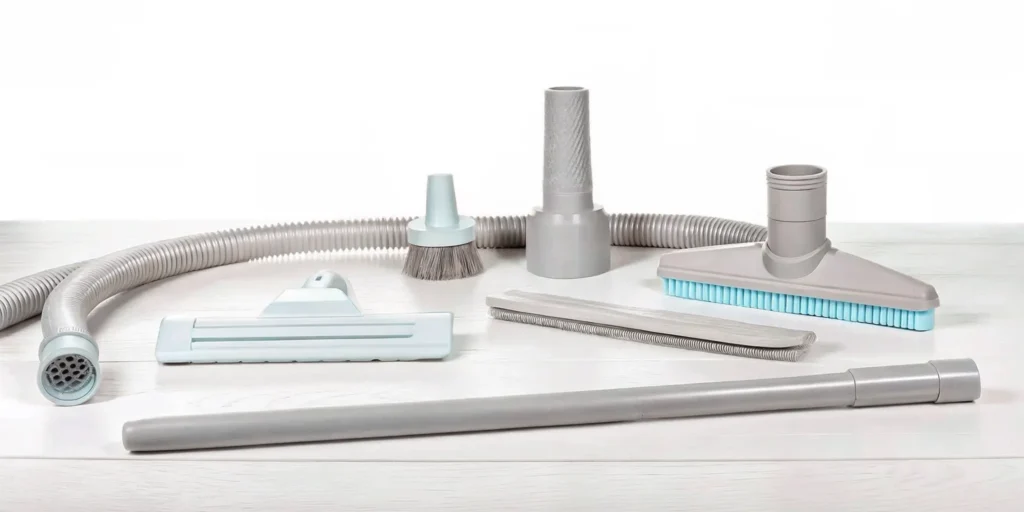
A canister wand can often reach farther beneath beds, tables, and low furniture. Its hose also lets you clean baseboards, upholstery, blinds, and high corners without lifting the motor. Review the floorhead, hose length, and included tools when comparing canister vacuum models. A useful attachment should connect with little effort and stay secure while you work.
An upright can feel direct and steady across open carpet because you guide one unit in front of you. Its floorhead may also track along room edges with fewer parts trailing behind. Above-floor work depends on the hose and wand design, so pull them out before buying. Make sure the upright remains stable when the hose reaches a sofa or stair.
Published weight tells only part of the story. An upright places more of the machine’s weight at the handle, while a canister leaves most weight on the floor. Steering resistance, wheel movement, hose pull, and handle shape can change how either style feels. A model that moves well for one person may feel awkward for another.
For a useful trial, push each vacuum across carpet and hard flooring. Turn around a chair, approach a wall edge, and guide the head beneath a table. Then compare an upright with separate upright models rather than judging the whole style from one machine. Finish by carrying it, changing tools, and returning it to its storage spot.
Pay attention to the tasks that usually slow you down. If stairs and furniture are the hardest areas, a light wand and flexible hose may matter most. If wide carpeted rooms take most of your time, the simple push-and-turn feel of an upright may suit your routine. The right choice should feel controlled from the first pass to cleanup.
Storage and room layout can matter as much as floor type in an upright vs canister vacuum decision. Think through the full cleaning route before choosing a machine.
An upright stores as one tall unit, so it often fits neatly in a narrow utility closet. The handle, cleaning head, cord, and main body stay together. Check the machine’s height and width against your closet before buying.
A canister separates the main body from the wand and floor head. That shape may fit under a shelf, but its hose and wand need their own space. Some closets handle this layout well, while crowded closets can make setup feel awkward.
Compare real canister vacuum models with upright models before measuring your storage area. Note where each cord winds, how the wand parks, and whether attachments stay on the machine.
An upright keeps most of the machine directly in front of you. This can make open rooms and long carpeted paths feel simple. In tight rooms, though, the full body must turn around furniture and pass through narrow gaps.
A canister’s wand can reach around chair legs, under beds, and into corners without moving the main body each time. The hose also adds another item to guide. Plan where the canister will roll so it does not catch on doorways or furniture.
Cord placement changes the route for either style. Look for outlets along the path, then consider whether you can clean each level without frequent unplugging. A practical cord wrap also makes storage quicker after the job.
For a multilevel home, lift the complete machine before deciding. A comfortable floor vacuum may feel much less convenient when carried up a full staircase. The UCLA ergonomics guide advises buyers to consider stair access and how easily equipment moves between work areas.
An upright moves as one piece, which avoids managing separate parts on the stairs. Yet its full weight travels with you. A canister lets you use a lighter wand on steps, but you must place or carry the main body safely.
Map your most common cleaning route from storage to the farthest room. Include thresholds, stairs, tight turns, and spaces beneath furniture. The better choice is the design that moves through that route with fewer awkward lifts, snags, and setup steps.
In an upright vs canister vacuum comparison, shape is only one part of the story. Filtration depends on the whole air path, from the floor head to the exhaust. A strong cleaner should move soil, hold it, and keep fine dust from escaping through gaps.
A sealed system guides incoming air through the bag or bin and filters before it leaves the machine. If air can leak around a cover, hose joint, or filter frame, the filter alone cannot manage that escaped air. Ask whether the full system is sealed, not just whether the machine includes a named filter type.
Filtration and cleaning power are related, but they are not the same measure. UCLA notes that airflow and water lift are measured separately and used to calculate an airwatt rating. Those figures can help explain air movement, while the sealed path and filter setup explain how the machine handles dust.
A bag can contain collected soil while you remove it, which may make disposal less messy. A bin lets you see when it needs attention, but emptying it can release dust. Neither setup is automatically better. Look at how securely it closes, how cleanly it empties, and how often it needs care.
Filter upkeep matters in both formats. A clogged filter can restrict airflow, while a filter installed the wrong way may leave a gap. Before comparing canister vacuum options with upright models, check the filter schedule and replacement process. Also ask whether each filter is washable or must stay dry.
The brush roll and floor head also affect daily results. Hair and thread can wrap around a brush roll, while packed debris can narrow an intake. Check these areas often, especially in homes with pets, long hair, or active sewing spaces.
Maintenance should fit your habits and comfort level. Some homeowners prefer simple bag changes, while others do not mind cleaning a bin and its parts. We suggest handling both formats, opening their service points, and asking about service and repair support before choosing.
The upright vs canister vacuum choice becomes easier when you focus on your home and cleaning habits. Neither shape is right for every person. Use this process to find the design that fits your floors, layout, and preferred cleaning motion.
Before comparing features, picture a full cleaning day from start to finish. Note every floor type, stairway, tight turn, and storage spot. UCLA’s ergonomics guidance says buyers should consider stairs and ease of transport when they assess an upright vacuum.
Once you know your likely format, compare machines with the same must-have features. Look at floorhead controls, hose reach, tool access, cord length, weight, and filtration. Our premium vacuum cleaners page offers a useful starting point for both styles.
Do not judge cleaning power from shape alone. Motor design, airflow, floorhead setup, and brush action can all affect results. For pet hair and mixed floors, compare suitable canister vacuum options against uprights with similar tools and filtration.
A floor plan can point you toward one style, but comfort may settle the choice. Push an upright through turns and recline it under furniture. With a canister, pull the body behind you and switch tools. Then lift each machine as if carrying it upstairs.
Specifications cannot tell you how a vacuum will feel around your own furniture. Check the handle, controls, turning radius, hose pull, and lift weight. Pay close attention to any motion that strains your wrist, shoulder, or back.
Bring your short list and daily cleaning concerns to a local store. Compare the machines in person, move each across different surfaces, and try the tools before choosing.
The upright vs canister vacuum choice is only the start. Two models with the same basic shape can clean, filter, and handle in different ways. Compare the full machine, not just the label on the box or one bold performance claim.
Strong suction helps, but it does not tell the whole cleaning story. Airflow, floorhead design, brush action, seals, and height settings all affect how well a vacuum picks up soil. UCLA explains that airwatts combine airflow and water lift, showing why one suction figure cannot describe total performance.
Match the floorhead to the surfaces you clean most. A powered brush can lift debris from carpet, while a gentle hard-floor tool can collect dust without scattering it. An adjustable brush roll also helps when a home has rugs, hard floors, and several carpet heights.
Attachments matter just as much for stairs, sofas, edges, and pet hair. Check which tools come with the machine and where they connect. Also test whether the hose reaches your common trouble spots without making the vacuum hard to control.
A canister shape does not promise better filtration, and an upright shape does not rule it out. Look at the complete air path instead. Useful details include a sealed body, the filter type, the bag or bin seal, and how dust is handled during emptying.
Bagged models can keep debris contained during removal, but the fit and closure still matter. Bagless models make collected dirt easy to see, yet emptying can release dust if the bin opens roughly. Ask how often filters need care and what that work involves.
Compare these details on models in the upright vacuum collection and the canister vacuum collection. The goal is not to assume one format wins. It is to find a filtration system that suits your home and care routine.
Try the controls before you choose. Check the handle weight, turning feel, cord reach, hose reach, and the effort needed on stairs. A canister body may follow easily on open floors, while an upright may feel simpler for quick carpet passes.
Small features can change daily use. Look for easy brush-roll control, useful suction settings, a cord that stores neatly, and tools you can reach fast. Noise, storage space, and the way a model moves around furniture may also shape your decision.
Finally, compare parts, bags, filters, warranty terms, and repair support. A well-matched vacuum should remain practical after the first year, not just impress during a short demo. Browse all vacuum cleaners, then compare individual features against your floors, layout, and cleaning habits.
Canister vacuums are often a strong choice for hard floors because their flexible hose and separate cleaning head move easily around furniture. Many models let users switch off the brush roll or attach a dedicated floor tool, which can help protect delicate surfaces. An upright can also work well if it offers brush-roll control, adjustable suction, and a suitable hard-floor attachment.
A canister vacuum is often easier to use on stairs and furniture because the user handles a light wand and flexible hose. The canister body may still need to be carried or positioned safely on a landing. A UCLA ergonomics guide recommends considering stair transport when assessing an upright vacuum’s portability.
Upright vacuums place the motor, cleaning head, and powered brush roll in one unit, making broad carpeted areas straightforward to clean. Their weight over the cleaning head may also help the brush engage carpet fibers. However, floor-head design, brush-roll adjustment, filtration, airflow, and maintenance matter more than the upright shape alone.
Canister vacuums can run more quietly because their motor housing may include stronger sound insulation and sits farther from the user. Noise varies widely by model, power setting, floor head, and maintenance condition. Compare manufacturer decibel ratings when available, and listen to each vacuum in person if operating noise is an important concern.
A canister vacuum does not automatically have better suction than an upright. Performance depends on the motor, airflow, filtration, hose design, floor head, and how well the machine is maintained. The UCLA ergonomics guide explains that airwatts combine airflow and water lift, making that rating more useful than motor wattage alone.
Waiting to compare upright and canister vacuums can leave you wrestling with a machine that does not match your floors or cleaning routine. A rushed choice may also make routine cleaning feel harder and leave important spaces less practical to reach. Starting now gives you time to weigh handling, storage, and floor needs before your current vacuum becomes a bigger frustration.
Ready to find the right fit? Shop vacuum cleaners to compare options at your pace. Then visit a Rocky Mountain Sewing and Vacuum store for expert help before you make your choice. Bring questions about your floors, stairs, pets, and storage so our team can focus on your needs. Contact us today and move forward with a vacuum that suits the way you clean.