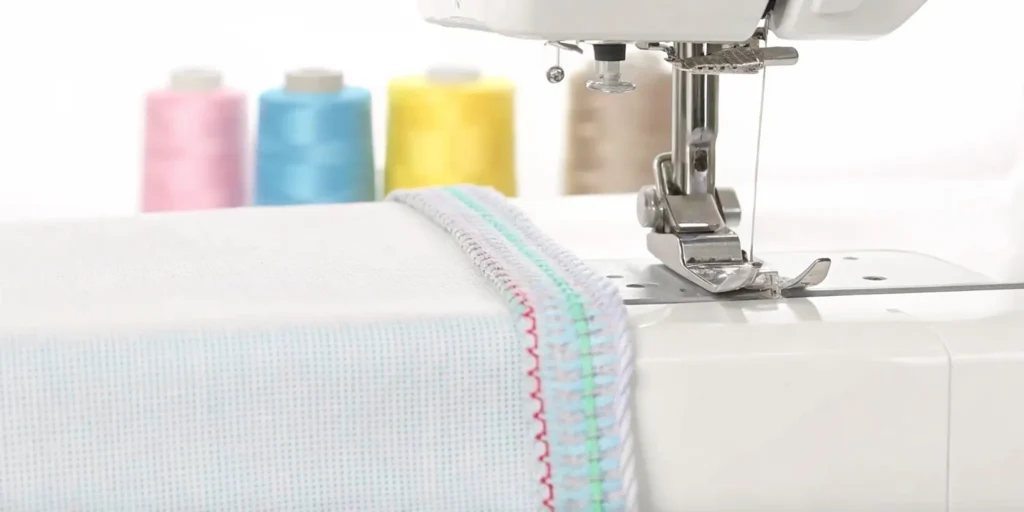


If the top layer of your quilt sandwich creeps ahead of the batting and backing, or your carefully matched plaids shift by the end of a seam, your technique may not be the problem. A walking foot sewing machine attachment helps feed the top and bottom layers together, reducing puckers, ripples, and mismatched edges. It is one of the most useful presser feet for quilting, sewing bulky seams, and managing fabrics that tend to slip.
Visit Rocky Mountain Sewing & Vacuum for hands-on help choosing a compatible walking foot.
A walking foot is helpful, but it is not the right tool for every seam. This guide explains how it works, the projects where it earns a place in your sewing kit, how to install it safely, and when an integrated dual-feed machine may be worth considering.
Rocky Mountain Sewing & Vacuum defines a walking foot, also called an even-feed foot, as a sewing machine attachment designed to help move multiple fabric layers under the needle at a similar rate.
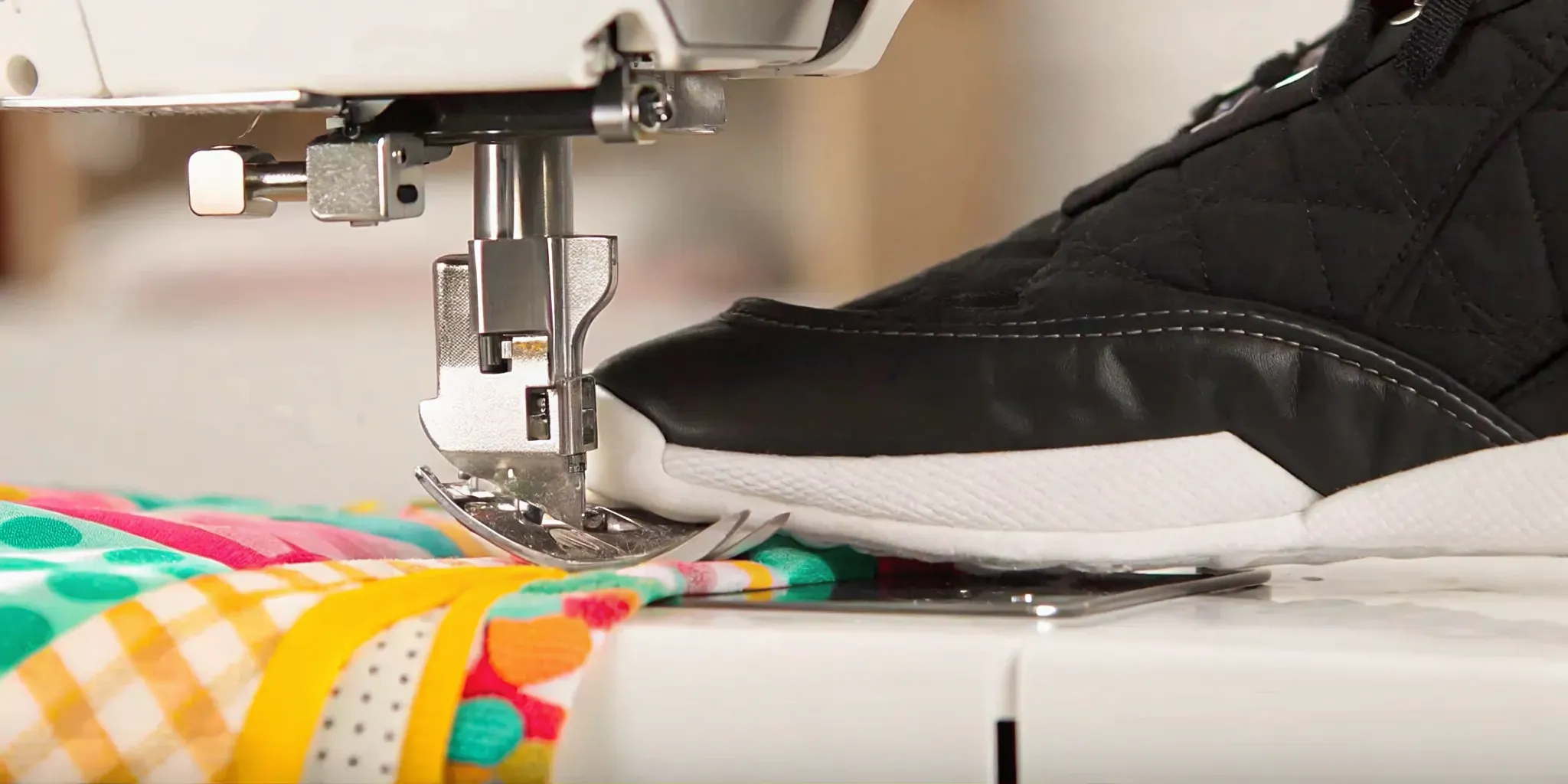
The attachment is recognizable by its substantial housing and the arm that connects to the needle-clamp area on many models. That arm converts the machine’s up-and-down motion into a gentle stepping action. Although makers often associate the foot with quilts, the same principle can improve control whenever two or more layers resist feeding together. Think of it as an accuracy tool: it cannot replace careful cutting or basting, but it helps preserve the alignment you worked hard to create.
On a standard sewing machine, the feed dogs below the presser foot grip the bottom fabric and move it toward the back of the machine. The presser foot holds the project down, but it does not actively move the top layer. On an easy single-layer seam, that arrangement works beautifully. With a quilt sandwich, slippery lining, thick binding, or matched pattern, however, the bottom layer may advance slightly faster than the top.
A walking foot adds a set of moving grippers above the fabric. As the machine stitches, the foot’s mechanism lifts and steps forward in rhythm with the needle bar and lower feed dogs. That extra movement helps the layers travel together instead of pushing the top fabric ahead.
The goal is not to pull the fabric through the machine. It is to give the layers more consistent support so you can guide the project without fighting it.
Reach for a walking foot when the layers are feeding unevenly, the project is bulky, or alignment matters from the beginning of the seam to the end. Common uses include the following.
A quilt sandwich combines a quilt top, batting, and backing, and each layer behaves differently under the presser foot. A walking foot helps prevent the top from creeping and reduces puckers on the back. It is especially useful for:
It is not intended for free-motion quilting, where the feed dogs are lowered or covered and the maker controls movement in every direction. For clean, controlled lines, though, a walking foot is a dependable choice. If you are setting up a larger quilting space, accessories such as the DIME Weightless Quilter can also help support the weight of the project so it does not tug against the needle.
Carefully matched motifs can drift when the lower feed dogs move one fabric layer faster than the other. A walking foot helps keep aligned stripes, plaids, and quilt-block intersections together as they pass under the needle. Pinning or basting is still important, but even feeding gives your preparation a better chance of staying accurate.
Vinyl, laminated fabric, some knits, velvet, and other challenging materials may stretch, stick, or shift. A walking foot can improve control because it feeds from above and below. Always test the fabric, needle, thread, stitch length, and foot combination on a scrap first. Some specialty materials may also benefit from a nonstick foot, roller foot, stabilizer, or other solution.
Bags, home décor, hems, and layered garments can create bulky transitions. A walking foot helps move consistent layers, but it does not increase your machine’s clearance or piercing power. If a seam is too thick to fit comfortably under the foot, do not force it. Grade seam allowances where appropriate, use the correct needle, and sew slowly.
Binding a quilt puts several layers and folded edges under the needle at once. A walking foot can reduce rippling and help the binding feed evenly around the quilt. For the best result, pause with the needle down when adjusting the project and keep the quilt’s weight supported on the table.
A walking foot is a problem-solving attachment, not a permanent replacement for every presser foot. Use a standard or specialty foot when it gives you better visibility, control, or stitch capability.
Build confidence with a hands-on new-owner sewing machine class.
Walking feet are not one-size-fits-all. Confirm that the foot is compatible with your machine’s brand, model, shank type, and maximum stitch width. A foot designed for one machine can interfere with the needle or fail to attach securely on another.
If you are unsure about compatibility or installation, bring your machine model information to one of our Colorado stores. Using the correct attachment protects your project and helps your machine perform as designed. If the machine is skipping stitches, making unusual sounds, or feeding poorly even with the correct setup, our sewing machine repair team can help identify the underlying issue.
A removable walking foot and an integrated dual-feed system solve a similar problem, but they are not identical.
| Feature | Removable walking foot | Integrated dual feed |
|---|---|---|
| Best fit | Occasional quilting and layered projects | Frequent precision and layered sewing |
| Setup | Attach when needed and remove afterward | Engage the machine’s built-in system |
| Presser-foot choice | Usually limited to the walking-foot design | Varies by machine and compatible foot selection |
| Visibility | Larger housing may reduce visibility | Often provides a more open sewing area |
| Buying decision | Practical upgrade for a compatible machine | Feature to compare when selecting a machine |
A traditional walking foot is an attachment powered by the motion of the needle bar. It is a practical way to add more even feeding to many compatible domestic machines. It can be bulkier than a standard foot, and the available stitch width or foot options may be limited.
An integrated dual-feed system is built into the sewing machine. Depending on the model, it may engage with a selection of compatible presser feet and provide excellent visibility and control. Sewists who quilt frequently, construct garments with shifting fabrics, or regularly make layered bags may appreciate the convenience.
A dual-feed machine may be worth considering if you use even feeding on most projects, want easier switching among compatible feet, or are ready for additional quilting-focused features. It is not automatically necessary for occasional straight-line quilting. A properly matched walking foot can be an excellent solution for many makers.
If you are comparing options, explore our sewing machines or see a specialized option such as the Baby Lock Compact Digital Dual Feed Foot. Compatibility matters, so talk with our team before choosing an attachment for your machine.
Explore dependable sewing machines and compare even-feed options with our team.
If layers still shift with a walking foot installed, stop and test before continuing across the project. First, confirm that the attachment is secured and its driving arm is positioned exactly as the manual shows. Replace a dull or unsuitable needle, rethread the machine with the presser foot raised, and check that lint has not collected around the feed dogs. Make a sample using the same fabric, batting, thread, and basting method. If the foot labors over a bulky seam, reduce speed and keep the attachment level rather than pushing the project. Persistent skipping, knocking, or uneven feeding can indicate an installation, compatibility, or machine-service issue. Continuing to force the seam risks damaging both the WIP and the machine, so ask a technician to inspect the setup.
No. Walking feet must match the machine’s model, shank type, attachment method, and stitch-width requirements. Check the manuals or ask a sewing-machine specialist before installing one.
Only if the machine and walking-foot instructions explicitly allow them. Many walking feet are intended mainly for straight stitches, and a wide stitch can cause the needle to strike the foot. Always test needle clearance by turning the handwheel before sewing.
A walking foot is strongly recommended for straight-line quilting on a domestic machine because it helps feed the quilt top, batting, and backing together. It is not used for free-motion quilting.
It can greatly reduce shifting and puckering, but setup still matters. Basting, correct thread tension, a suitable needle, good project support, and gentle guiding all contribute to a smooth result.
Integrated dual feed is convenient for frequent layered or precision sewing, while a removable walking foot is a capable option for occasional use. The better choice depends on your projects, preferred feet, machine compatibility, and how often you need even feeding.
A walking foot is a simple way to say yes to projects that once felt too bulky, slippery, or difficult to align. When it is correctly matched to your sewing machine, it helps layered fabric feed more consistently and gives you greater control over straight-line quilting, binding, pattern matching, and other precision work.
Not sure whether you need a walking foot, a dual-feed system, or a different specialty foot? Visit Rocky Mountain Sewing & Vacuum for dependable equipment and expert, hands-on guidance. Bring your machine model and tell us what is on your project list, and we will help you find a setup that lets you sew with confidence.
Find your nearest Colorado store and bring your machine model for personalized guidance.