
Outside Colorado? Get Free Shipping + No Sales Tax in Most States

Searching for used sewing machines for sale near you is one of the smartest moves a sewist can make. A quality pre-owned machine can deliver years of reliable stitching at a fraction of what you would pay for a brand-new model. The catch? Not every used machine is a good deal, and a low price tag means nothing if the machine jams on its first project.
We see it all the time at our Colorado stores. Someone picks up a sewing machine from an online marketplace, brings it in for repair, and discovers the fix costs more than the machine is worth. That is the scenario we want to help you avoid. In this guide, we will walk you through exactly what to inspect, where to shop, and why buying refurbished from a trusted dealer is often the best path to a machine you will love for years.
New sewing machines are wonderful, and we carry a full lineup of them. But the reality is that a well-maintained used sewing machine can perform just as beautifully as the day it left the factory. Machines from brands like Baby Lock, Bernina, Janome, and PFAFF are built to last decades when they receive regular service.
Here is what makes a used or refurbished machine an appealing option:
These two terms get thrown around interchangeably, but they are not the same thing, and the distinction matters when you are spending your hard-earned money.
Used simply means the machine has had a previous owner. It could be in perfect condition, or it could have hidden issues. When you buy used from a private seller, you are trusting their description and your own ability to spot problems. There is usually no warranty, no return policy, and no professional inspection backing up the sale.
Refurbished means a factory-trained technician has gone through the machine thoroughly. At our service center, a refurbished machine receives a full diagnostic, cleaning, timing adjustment, tension calibration, and any necessary part replacements before it goes back on the floor. We test every stitch function, every speed setting, and every accessory that ships with it. When we hand you a refurbished machine, we stand behind it.
The peace of mind that comes with a professionally refurbished machine is significant. You are not gambling on someone else’s honesty about why they are selling. You are getting a machine that our technicians have verified from the inside out.
Whether you are shopping at a dealer, a garage sale, or an online marketplace, these are the checks that separate a solid find from an expensive mistake.
Start with a careful visual inspection. Look for dents, deep scratches, cracks in the casing, and any signs the machine has been dropped. Minor cosmetic marks on the body are normal for a machine that has seen real use, but damage to the needle plate area, such as gouges or deep scratches near the needle hole, suggests rough handling or sewing over pins, which can affect stitch quality.
Check that the power cord is intact with no fraying or exposed wires. The foot pedal should respond smoothly across the full speed range without sticking or cutting out. Power the machine on and confirm all lights, displays, and buttons respond. A machine that powers on intermittently is waving a red flag.
Turn the handwheel manually. It should rotate smoothly without grinding, catching, or making unusual noises. Engage the bobbin winder and check that it operates correctly. If the machine sounds clunky or resists at any point in its rotation, there may be timing issues or dried lubricant causing internal friction.
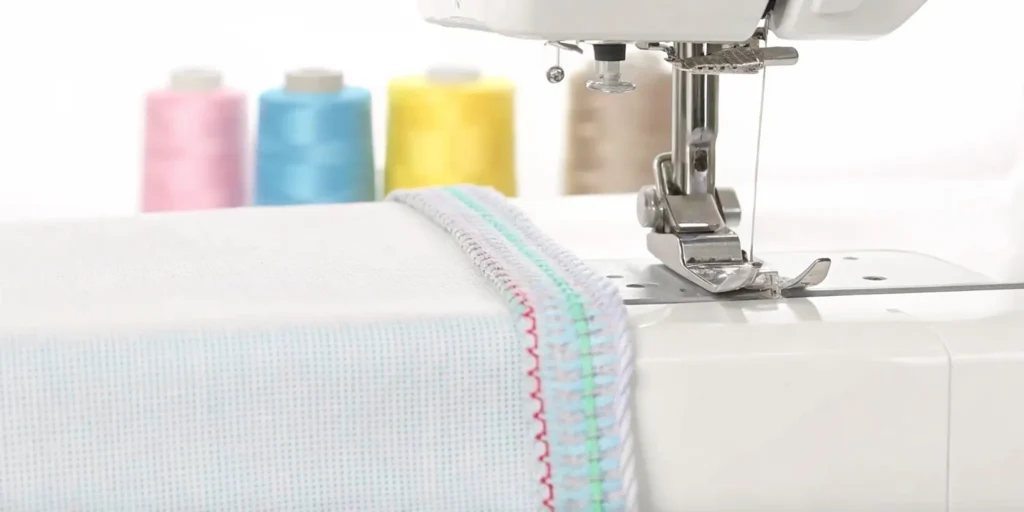
This is the test that matters most. Thread the machine (bring your own thread and a few fabric scraps if you are buying from a private seller) and sew several inches of straight stitch. Flip the fabric over. The stitches should look balanced on both sides, with the thread interlocking neatly in the middle of the fabric. Uneven loops on the top or bottom indicate tension problems.
Next, test the zigzag stitch and a few decorative stitches if the machine offers them. Every stitch type should form cleanly without skipping, bunching, or bird-nesting underneath.
Remove the bobbin case and check for lint buildup, rust, or damage. A well-cared-for machine will have a relatively clean bobbin area. Excessive lint packed around the feed dogs and hook assembly suggests the previous owner skipped regular maintenance, a clue that internal components may not have received proper attention either.
Before you hand over any money, look up the specific model online. Check how old it is, whether replacement parts are still available, and what common issues owners have reported. A machine with no available parts is a ticking clock, no matter how well it sews today. Brands with strong dealer networks, like Janome, Baby Lock, and Bernina, tend to have better long-term parts availability.
Not all sources are created equal, and where you buy affects the risk you take on.
This is the gold standard for buying a pre-owned machine. An authorized sewing machine dealer has factory-trained technicians on staff who can inspect, service, and certify the machines they sell. You typically get a warranty, the ability to return the machine if something is off, and a relationship with a shop that can service it for years to come.
At Rocky Mountain Sewing & Vacuum, we carry a rotating selection of refurbished machines across multiple brands and price points. Every machine in that collection has been through our service center and is ready to sew out of the box.
Estate sales can be treasure troves for sewing machines, especially vintage mechanical models. The advantage is that estate machines were often owned by dedicated sewists who took care of their equipment. The downside is that you cannot always test the machine on-site, and there is no return policy. If you go this route, bring your inspection checklist and budget for a professional tune-up before you start sewing.
Facebook Marketplace, Craigslist, and similar platforms connect you with local sellers. Prices tend to be lower, but so is your protection. Always insist on seeing the machine in person and running it through the tests we outlined above. Never buy a sewing machine sight unseen based on photos alone.
Local sewing guilds and quilting groups are an underrated source for quality used machines. Members who are upgrading often sell their previous machines within the group, and these machines tend to be well-maintained by experienced sewists. Check guild bulletin boards, Facebook groups for your area, and community center postings.
A refurbished machine from a reputable dealer will typically cost more than the same model on a marketplace listing. Here is why that price difference is money well spent.
Pricing depends on the brand, model, age, condition, and where you are buying. Here are some general ranges to help you set expectations:
A useful rule of thumb: a well-maintained, refurbished machine should run about 40% to 60% of its original retail price, depending on age and condition. If a deal seems too good to be true, it usually is.
Whether you are dealing with a private seller or a dealer, these questions help you make a confident decision:
Even if you bought from a dealer who serviced the machine, a few steps will set you up for the best possible experience with your “new-to-you” sewing machine.
We have seen these mistakes hundreds of times. Learn from them so you do not have to learn the hard way.
If you are searching for used sewing machines for sale near you in the Colorado Front Range, we invite you to visit one of our four Rocky Mountain Sewing & Vacuum locations. Our refurbished machine collection changes regularly as trade-ins and consignment pieces come through our service center, so it is always worth checking current availability.
Every refurbished machine we sell has been inspected and serviced by our factory-trained technicians. You get a warranty, access to our full-service repair center, and a team that is here to support you long after the sale. Whether you are a beginner picking up your first machine or an experienced quilter looking for a second machine for travel or classes, we will help you find the right fit.
Stop by any of our stores in Arvada, Aurora, Littleton, or Colorado Springs, or give us a call at 1-888-897-6362. We would love to help you find a machine that inspires your next project.